
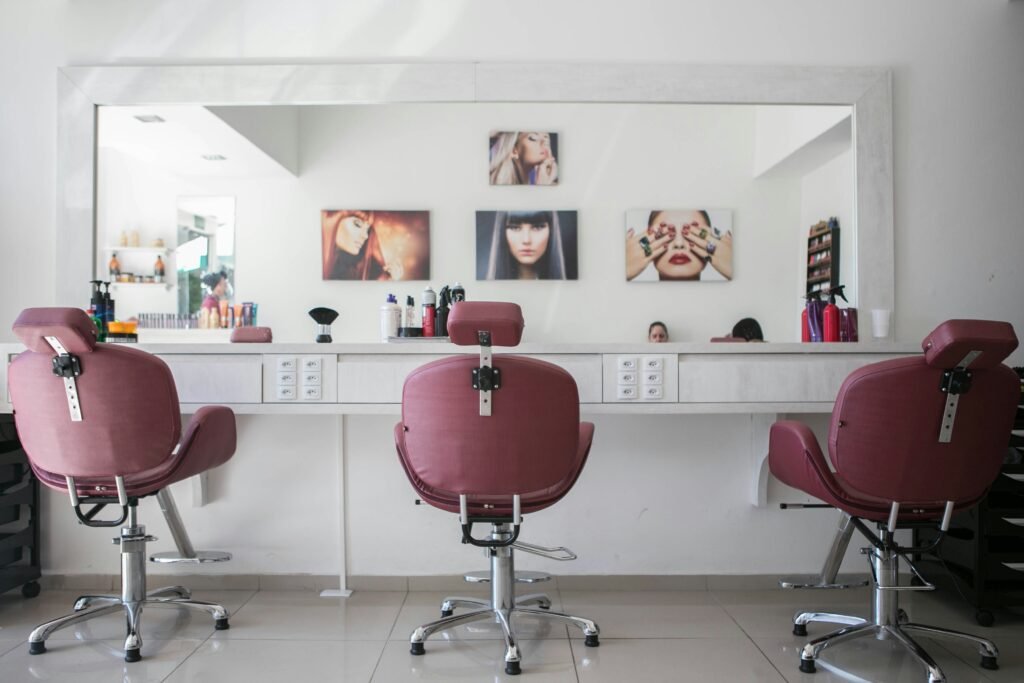
The most expensive thing in Bimpe’s salon wasn’t the imported hair dryer or the Italian styling chair. It was the empty chair during what she called the “ghost hours”—those dead stretches, usually midweek afternoons, where she’d sit scrolling, listening to the hum of the generator burning fuel for no one. Her logic was simple: stay open, stay ready. But readiness had a cost she never calculated.
Her days were a symphony of physical labour and mental negotiation. A client would sit, ask for a style she’d seen on Instagram. Bimpe’s mind would perform a frantic, silent calculus: the time (2.5 hours), the product (almost a full jar of gel), the effort (intricate parting under bad light). Then, the client’s casual question: “How much, mama?” And the number that left Bimpe’s lips was always a surrender, a figure born from the fear of seeing the chair go empty again. “N5,000,” she’d say, smiling through the instant regret. The math never worked. The generator fuel alone was N1,500 a day.
Her losses weren’t dramatic. They were a slow leak. A jar of hair food used up over three clients but only charged to one. The “small change” discount for a regular who was already late. The boxes of braiding hair bought on a supplier’s promise of a “hot new style” that now gathered dust in the cupboard, a monument to trend pressure. She was busy, her hands were always moving, but her cash box felt perpetually light. She blamed the economy, blamed stubborn customers, blamed the heat.
The shift started with a simple, frustrated tally. After a particularly gruelling Saturday where she serviced eight clients and still felt broke, she opened her phone notes. Not to analyse, just to lament. She typed a stream of consciousness: “Sat: 8 clients. 5 braids, 2 cuts, 1 treatment. Finished jar of edge control. Cash: felt short. Tired. Client No. 4 came 30mins late, messed up schedule.”
For a week, she kept this up. No grand plan. Just a daily minute of confession. “Mon: 2 clients only. Long quiet afternoon. Used generator for 4 hrs for nothing.” “Wed: 3 braids. All wanted same style. Ran out of Kanekalon. Had to send apprentice.”
After seven days, she selected the messy notes and pasted them into an AI. Her prompt was pure exhaustion: “What is this telling me?”
The response wasn’t a solution. It was a mirror held up to her own week.
It grouped her chaos.
“Pattern 1: Highest demand is for basic braiding (5 times).
“Pattern 2: ‘Quiet afternoon’ occurs predictably on Mondays and Wednesdays.
*“Pattern 3: Generator use is high even on low-client days.”*
Then it asked a question her frustration had never allowed: “What if the goal isn’t to fill every hour, but to make the busy hours truly profitable?”
She didn’t buy new equipment. She changed her mirrors.
First, she looked at her pricing through the AI’s neutral lens. She listed her services and times. The analysis was blunt: her intricate, 3-hour braiding job was priced only N1,000 more than a simple 1-hour haircut. She was penalizing her own skill.
She made one change. She raised the price of her complex braids by N2,000—not a revolution, a correction. She feared client backlash. The next client who asked for it simply said, “Okay, your hands are worth it.” The money from that one service now covered her generator fuel for a day.
Next, she saw the “ghost hours” for what they were: a scheduled financial leak. Using her notes, she formally closed the salon on Wednesday afternoons. The world didn’t end. Instead, she used that time to restock, plan, and actually rest. She returned on Thursday refreshed, her hands steadier.
She used the AI to draft short, clear replies to the endless WhatsApp messages: “Haircut is N3,000. We close 4pm on Wednesdays.” She saved them. The constant mental switching between styling and texting reduced. Her focus during appointments deepened.
Bimpe’s story isn’t about an app running a salon. It’s about a stylist finally getting a vantage point. The AI didn’t hold a pair of scissors. It held up a ledger of her own habits, showing her the gap between motion and profit, between exhaustion and income.
The goal was never to become a tech salon. It was to stop being a guessing salon. To replace the anxiety of the empty chair with the calm strategy of the profitably full one. To understand that sustainability isn’t about working more hours, but about seeing clearly which hours actually work for you.
The method for achieving this clarity is a process of quiet observation, not complex tech. The guide AI for Hair Salons & Barbers provides the steps. It’s not about learning to code; it’s about learning to see the patterns in your own shop, so you can protect your energy, price your skill fairly, and turn daily hustle into lasting calm.