
The most expensive part of Kemi’s tailoring business wasn’t the Ankara fabric or the thread. It was the space between what she knew her work was worth and the number that eventually left her lips. It was the unmeasured margin—swallowed by hesitation, guilt, and the crushing need to be liked.
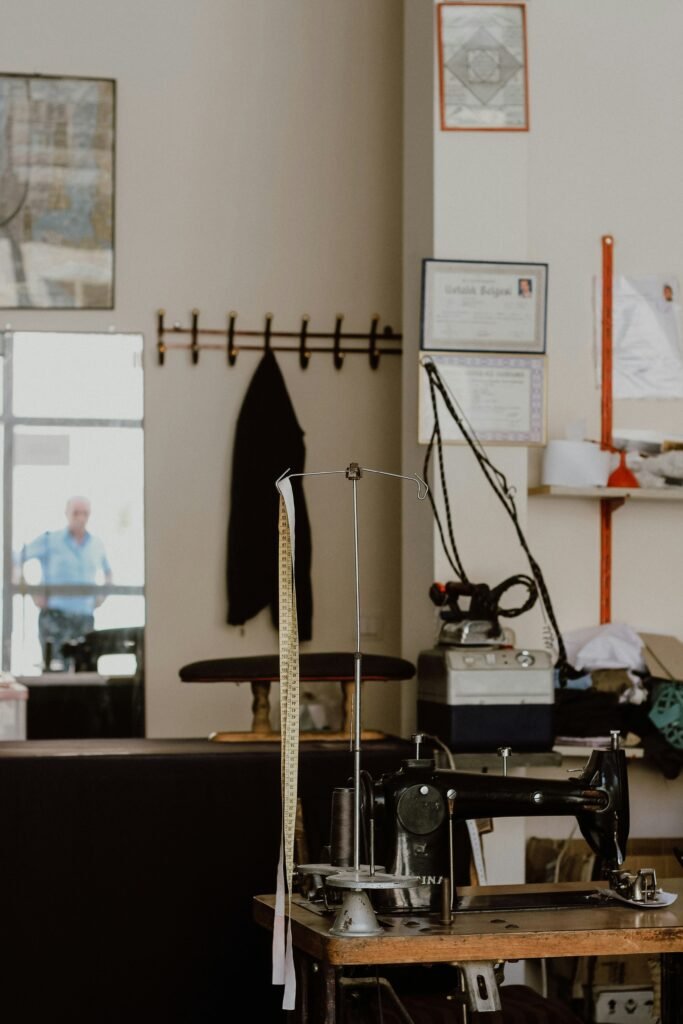
Her workshop was a testament to skill. Finished garments hung like promises. Yet, her most constant companion was a low-grade anxiety, humming like the faulty stabilizer in the corner. It sounded like this: a client would send a blurry Pinterest screenshot at 11 PM, caption: “Can you do this like this? How much?”
Kemi would stare. She’d mentally deconstruct the dress—the pleats, the lining, the beadwork. Her mind would tally: fabric, time, complexity. Then, a second, louder voice would interrupt: “She’s a student. Don’t scare her. Just say N15,000.” She’d quote N15,000. The client would reply, “Okay, I’ll get back to you.” Silence. A week later, Kemi would see a similar dress on the client’s Instagram, made by someone else. The price tag, she’d later learn, was N25,000.
Her losses were never in the stitching. They were in the silence before the stitching. In the measurements scribbled on paper scraps that went missing. In the “simple adjustments” that consumed an entire afternoon. In the elegant client who spoke softly but demanded endless fittings without ever mentioning extra pay. Kemi’s resentment grew, but it was a quiet, inward-facing resentment that only exhausted her further.
The shift wasn’t a decision to “get high-tech.” It was an act of desperation. Faced with a particularly vague request for a “unique aso-ebi style,” she did something new. Instead of replying immediately with a guess, she opened her notes and typed a raw brain dump: “Client wants ‘unique’ but no picture. Wants for October. Usually changes mind. Has money but negotiates hard. I am tired already. Fabric will be expensive. What do I even say?”
She copied the text and pasted it into an AI. Her prompt was a cry for structure: “Help me turn this messy client situation into a clear professional response and a fair price breakdown.”
What came back wasn’t a reply to send. It was a thinking table. It laid out her own chaos in orderly columns: Client Uncertainty Risk, Design Clarification Steps, Suggested Pricing Tiers (Basic/Standard/Premium), and Recommended Timeline with Buffer.
For the first time, her fear had a shape. It wasn’t a monster; it was a list of manageable questions. Using that structure, she replied not with a single price, but with clarity: “I’d love to make this for you. To give you an accurate quote and design, I’ll need us to settle three things: a reference image, the fabric type you prefer, and your preferred fitting dates. My pricing ranges from NX to NY based on these details.”
The client, surprisingly, responded with more respect. They booked a consultation.
Kemi began using the AI as this external brain. Before pricing, she’d list materials and complexity, and ask it to outline cost pillars. Before accepting a rush job, she’d map her weekly schedule and ask it to identify the pressure points. She stopped storing measurements in her head; she pasted them into the AI and asked it to create a clean, reusable client record.
The tool didn’t make decisions for her. It showed her the architecture of her own decisions. It turned the fog of “I’m undercharging” into the clear fact: “Your labour is 30% of the cost but you’re pricing it at 10%.” It transformed “I’m so busy” into “You have three deliveries scheduled for the same day you planned to go to the fabric market.”
The change wasn’t that she became rich. It was that she became calm. She began to say “Let me check my schedule and revert” instead of a desperate “Yes, I can.” The clients who left were the ones she could barely afford. The ones who stayed began to treat her with more professional deference, because she now carried herself with the quiet authority of someone who could see her own boundaries.
Kemi’s story isn’t about software. It’s about the relief of externalizing a mental burden. The AI didn’t sew a single stitch. It simply held up a mirror to her business practices, allowing her to see—and then correct—the leaks in her confidence, her pricing, and her time. The most valuable seam she learned to sew was the one between her instinct and her intention.
The goal was never to remove the human touch from tailoring, but to protect the human tailor from the chaos that cheapened it. To trade the exhausting guesswork for the quiet confidence of measured decisions.
The path from anxious artisan to calm professional is built on structured thinking. The guide AI for Tailors & Fashion Designers provides the framework. It’s not about replacing your eye for design, but about supporting your mind for business. So you can spend less time worrying about what to charge, and more time mastering what you create.